
Research & Development
As a hub for cutting-edge research, IITGN is fostering interdisciplinary collaborations to address critical challenges in science, technology, design, and society. Through partnerships with leading global institutions and industries, the institute drives advancements in energy, healthcare, artificial intelligence, sustainability, and materials science. With world-class research facilities, a strong emphasis on translational impact, and a flexible academic structure, IITGN provides an environment that supports innovation, industry collaboration, and international research engagement.
Research SpectraIIT Gandhinagar aspires to promote world-class research that will make a positive impact on society today and groom the leaders and creators of tomorrow’s technologies.
The Institute is also fostering ties with various institutes in India and abroad, which enables IITGN
undergraduate students pursue short term research stints during the summer. Our Summer Research
Internship Programme (SRIP) has become flagship program among students with a selectivity of about 1
in 100 applications.
View Research Facilities Library
Highlights
-
Indo-Thailand Workshop on AI-Driven Innovations (AIDI)
Moreflip_to_frontIndo-Thailand Workshop on AI-Driven Innovations (AIDI)
-
Strengthening Academic and Industrial Collaborations with Taiwan
Moreflip_to_frontStrengthening Academic and Industrial Collaborations with Taiwan
-
Towards A New Era: Launch of GIFT International Fintech Institute
Moreflip_to_frontTowards A New Era: Launch of GIFT International Fintech Institute
-
Japan Meets India’ Summit to Foster Collaboration in Research and Education
Moreflip_to_frontJapan Meets India’ Summit to Foster Collaboration in Research and Education
-
Secretary Hillary Rodham Clinton, former First Lady and Secretary of State of the US, visits IIT Gandhinagar
Moreflip_to_frontSecretary Hillary Rodham Clinton, former First Lady and Secretary of State of the US, visits IIT Gandhinagar
Research@IITGN
-
-
-
-
-
Unusual Rainfall in Gujarat Sparks Concerns Over Urban Flooding and Infrastructure Resilience
Link link
Research Capsules
-
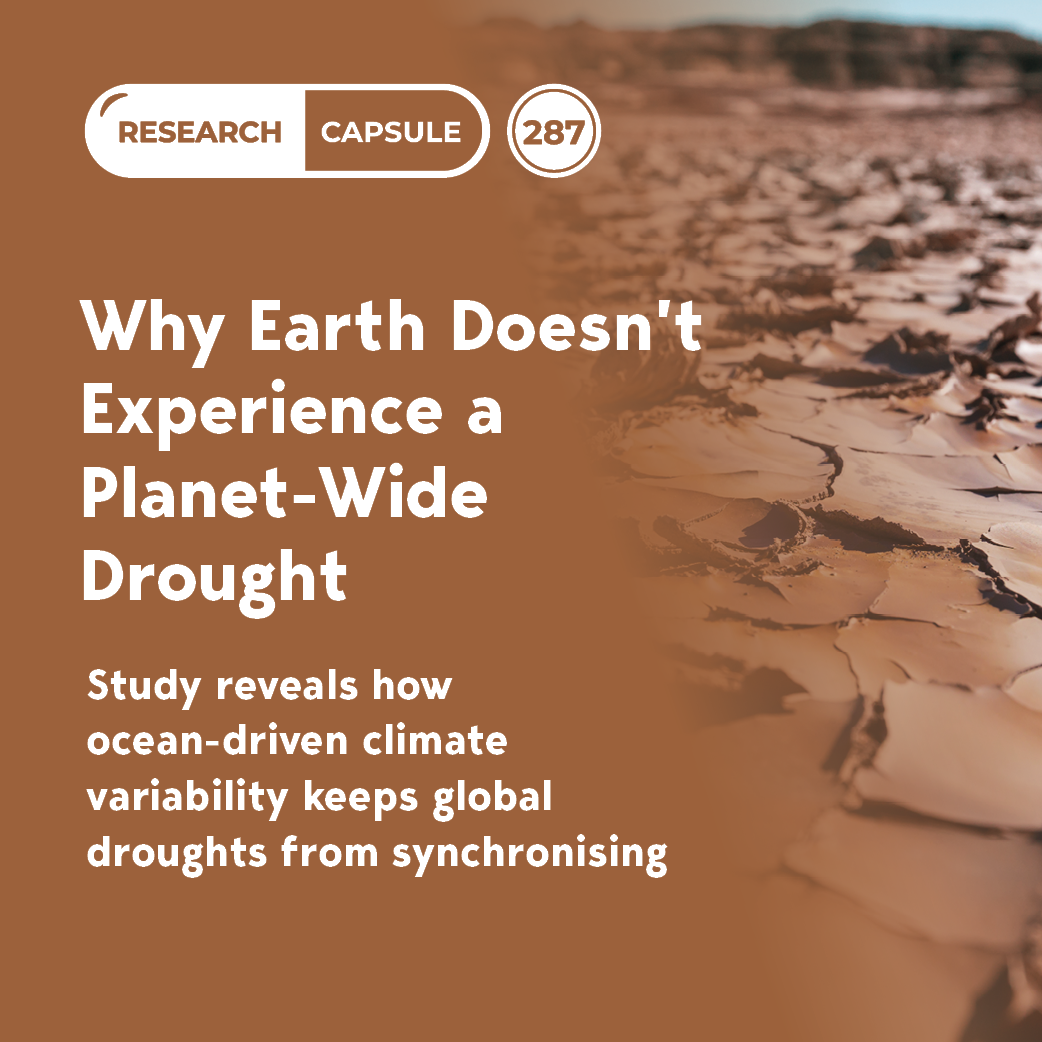
Why Earth Doesn't Experience a Planet-Wide Drought
Moreflip_to_frontWhy Earth Doesn't Experience a Planet-Wide Drought
Drought is one of the most damaging climate hazards, placing pressure on crops, water supplies, and livelihoods across the globe. For years, scientists have worried about the possibility of several major agricultural regions experiencing drought at the same time. If such events were to coincide across continents, the strain on global food systems could be immense, posing serious challenges to efforts such as Sustainable Development Goal 2 (Zero Hunger) and Sustainable Development Goal 13 (Climate Action). Yet despite rising global temperatures and increasing climate variability, droughts rarely occur everywhere at once.
Find Out More
Share favorite_border -
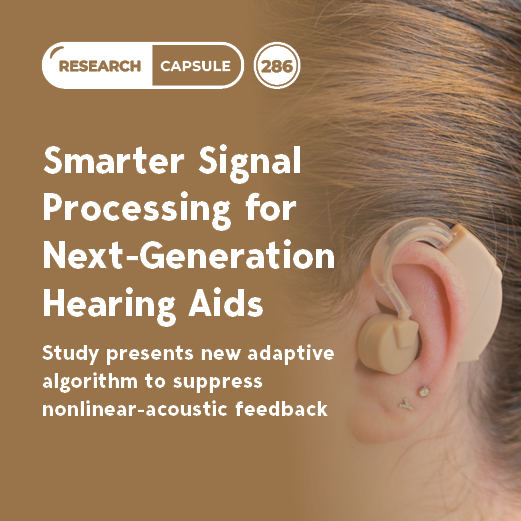
Smarter Signal Processing for Next-Generation Hearing Aids
Moreflip_to_frontSmarter Signal Processing for Next-Generation Hearing Aids
When amplified sound from a hearing aid re-enters its microphone, it creates a self-sustaining loop that produces a high-pitched whistle called acoustic feedback. As one of the most persistent technical challenges in the device’s design, modern devices use adaptive filters that act as ‘sound erasers’ to suppress this effect. Although most conventional approaches assume the system creates echoes, in practice, hearing aid components introduce distortions of loud sounds, limiting the effectiveness of traditional methods.
Find Out More
Share favorite_border -
Precision Monitoring For Next-Generation Ultrasound Therapies
Moreflip_to_frontPrecision Monitoring For Next-Generation Ultrasound Therapies
Modern therapeutic interventions thrive on precision, and precision begins with effective monitoring. Therapies such as histotripsy and ultrasound-mediated drug delivery harness a phenomenon called cavitation, which involves the formation and collapse of microscopic bubbles in response to ultrasound exposure inside the body. These bubbles can mechanically break down targeted tissue, including cancer cells, non-invasively and enhance drug delivery by temporarily increasing cell membrane permeability. Yet accurately tracking this bubble activity in real time remains a major challenge, limiting clinicians’ ability to monitor therapy and confirm treatment outcomes.
Find Out More
Share favorite_border -
Keeping 3D Printing on Track with Al
Moreflip_to_frontKeeping 3D Printing on Track with Al
The most dangerous manufacturing crises are the ones that develop silently. As 3D printing moves beyond hobbyist spaces into research and industrial applications, early fault detection is critical to preventing these failures before they escalate. Nozzle clogging is a common and critical problem that weakens parts, distorts dimensions, and ruins prints after hours of work. Conventional detection methods designed for filament-based printers don’t work well for the newer pellet-based 3D printers, where material flow is more complex.
Find Out More
Share favorite_border -
Turning Clay into a Nano-Control System
Moreflip_to_frontTurning Clay into a Nano-Control System
From cellular processes in the human body, to emerging technologies like sensors and lab-on-a-chip devices, the movement of ions (charged particles like sodium and potassium) in water plays a critical role in their functioning. Scientists have long known that electric fields can be used to control ion flow, but only in low-salt conditions. In real-world systems like seawater, blood, or industrial wastewater, high salt concentrations usually cancel out electrical control, making precise regulation extremely difficult.
Find Out More
Share favorite_border
Research Snips
-
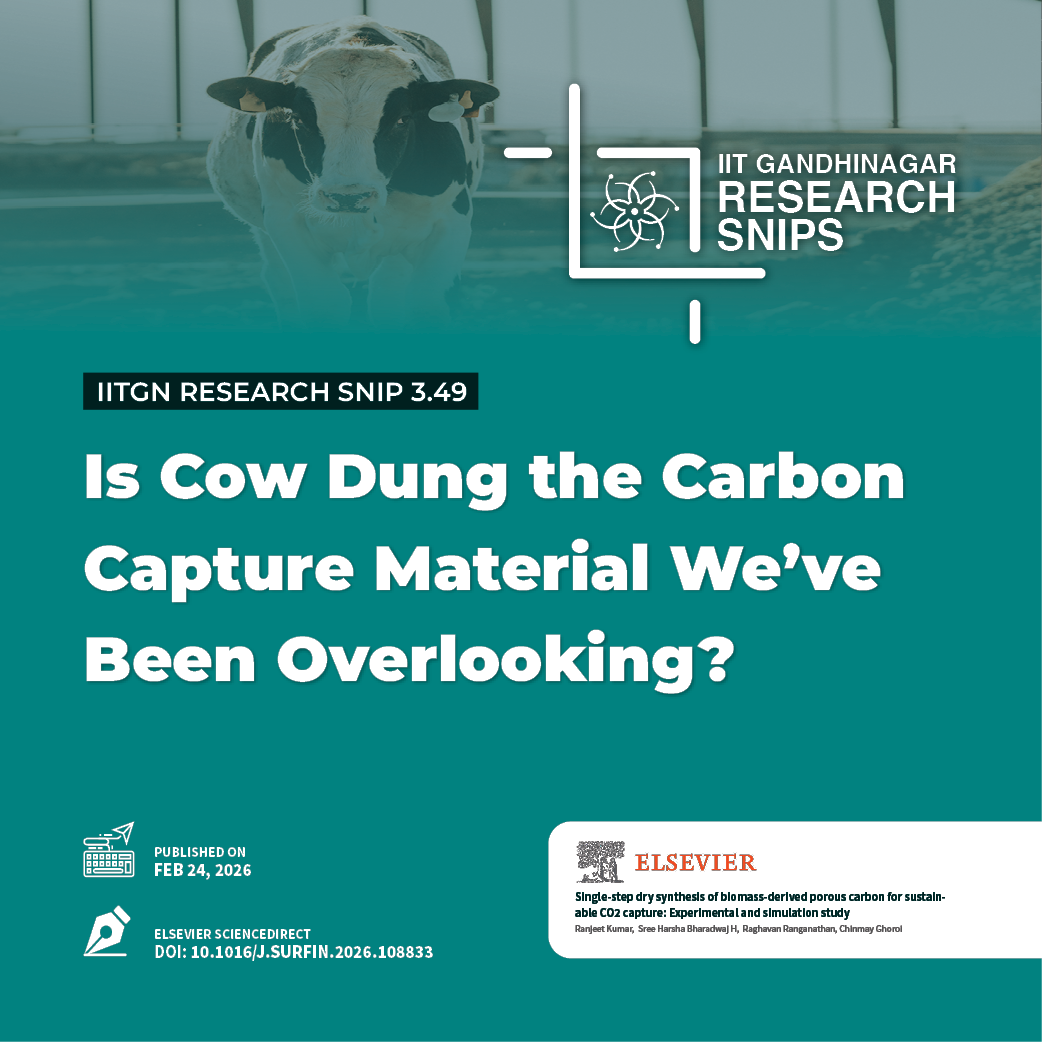
Is Cow Dung the Carbon Capture Material We've Been Overlooking?
Moreflip_to_frontIs Cow Dung the Carbon Capture Material We've Been Overlooking?
We spend a lot of time chasing high-tech climate solutions. This one starts in a barn.
Researchers have developed a carbon-capture material sourced from cow dung processed through a clean, low-cost method that yields a stable, porous structure capable of pulling CO₂ from the atmosphere. Adding nitrogen to the mix sharpens its performance by 58% compared to pristine carbon, without introducing any toxic chemistry.
Find Out More
Share favorite_border -
Getting to Black Holes Faster: Efficient Estimation of Black Hole Parameters
Moreflip_to_frontGetting to Black Holes Faster: Efficient Estimation of Black Hole Parameters
Ten years from now, three spacecraft will be launched into orbit around the sun, approximately 50 million kilometres from Earth, to detect ripples in the spacetime called gravitational waves (GWs). This detector is named Laser Interferometer Space Antenna (LISA), and has an arm length of 2.5 million kilometres between its spacecraft, a million times larger than the terrestrial LIGO observatory, enabling the detection of GWs in milli-Hertz band. LISA will detect GWs from supermassive black hole binaries. The authors propose the use of a meshfree method in accelerating the parameter estimation of such sources.
Find Out More
Share favorite_border -
Cues to Move: Parkinson’s Patients Perception of Physical Stimulation
Moreflip_to_frontCues to Move: Parkinson’s Patients Perception of Physical Stimulation
Freezing of gait is a common symptom of Parkinson’s disease, where patients briefly lose the ability to move forward while walking. Vibrations of small frequency on the skin at various locations, or vibrotactile stimulation, have been shown to help overcome this freezing. Studying Parkinson’s patients alongside healthy individuals, the authors compare how accurately these groups perceive vibrotactile input at various locations such as ‘Thigh’, ‘Finger’, ‘Wrist’ etc. They find that ‘Thigh’ is the best location for vibrotactile input, followed by ‘Wrist’, in Parkinson’s patients.
Find Out More
Share favorite_border -
Sugar that Heals: Chitosan-based Hydrogels that Self-Heal
Moreflip_to_frontSugar that Heals: Chitosan-based Hydrogels that Self-Heal
A sugar found in the outer skeletons of shellfish, Chitosan, offers durability to materials called hydrogels - three-dimensional networks of polymers in water used in biological and medicinal contexts. Conducting a review on chitosan-based hydrogels, the authors highlight the various methods to synthesise these hydrogels. They outline how characterization of these hydrogels is carried out, for important physical properties such as injectibility and recoverability, and biological properties such as drug delivery, viability, and compatibility.
Find Out More
Share favorite_border -
Homework or Home Work: Unpaid Domestic Labour Influence on Educational Outcomes
Moreflip_to_frontHomework or Home Work: Unpaid Domestic Labour Influence on Educational Outcomes
Chores at home after school take away time from study and leisure. Analysing data from UDAYA, a large publicly available survey of adolescents and youth in Uttar Pradesh and Bihar states of India, the authors establish the influence of unpaid domestic labour on educational outcomes among 12-23-year-olds.
Find Out More
Share favorite_border
Postdoc Times
-
Battling Superbugs by Breathing New Life into Old Drugs
Moreflip_to_frontBattling Superbugs by Breathing New Life into Old Drugs
In the battle against bacteria, scientists are constantly searching for new weapons. However, developing brand-new drugs is time-consuming and expensive. Taking a different approach, Dr Rinku Choubey and Dr Moumita Chatterjee, have enhanced an existing medication by pairing it with a specialised molecule. This tag-team approach involves acetazolamide (AZM) and octaarginine (R8). By adjusting the ratio of these molecules and testing them against E. coli, the researchers found the combo to be an effective antibacterial!
Find Out More
Share favorite_border -
Blink and Miss: A Dilemma of Nanoscale Light Emitters
Moreflip_to_frontBlink and Miss: A Dilemma of Nanoscale Light Emitters
Perovskite Nanocrystals (PNCs) hold immense promise for next-gen technology, from ultra-efficient displays to quantum computing. However, a persistent challenge—Photoluminescence blinking—disrupts their performance by causing intermittent light emission. At IITGN’s NanoPlasmonics Research Lab, Dr NVS Praneeth, a Research Associate, is tackling this issue by developing protective coatings for Perovskite and QDs. The cross-institute research study aims to enhance the reliability of advanced QD and PNC-based technologies, paving the way for brighter displays, high-precision bioimaging, quantum encryption, and efficient solar cells.
Find Out More
Share favorite_border -
Nature’s QR Code: How DNA Barcoding Deciphers Plant Identity
Moreflip_to_frontNature’s QR Code: How DNA Barcoding Deciphers Plant Identity
Nature is full of lookalikes—plants that appear nearly identical but may belong to entirely different species. This similarity can lead to major challenges for scientists, especially in medicine, agriculture, and conservation. Dr Nilesh Gawande, a postdoctoral fellow at IITGN, is part of a project that is using DNA barcoding for species identification with genetic precision. In a research study with multi-institute contributions, researchers analysed the matK gene and found it to be a robust marker that can differentiate even the most minor variations within closely related plant species.
Find Out More
Share favorite_border -
Time Travel Through Teeth?
Moreflip_to_frontTime Travel Through Teeth?
How did the Harappan civilisation sustain their cities, feed their livestock, and adapt to environmental challenges? Dr Manisha Kesarwani from the Interspecies Research Network (IRN-IITGN) of IITGN is part of a multi-institute, interdisciplinary study that is attempting to answer these questions by analysing the teeth of ancient domesticated animals. Using isotopic techniques, the team aims to uncover how Harappan communities residing in the ancient city of Dholavira, responded to climate shifts and seasonal changes.
Find Out More
Share favorite_border -
Infinite Sums, Precise Outcomes: Exploring New Arithmetic Terrai
Moreflip_to_frontInfinite Sums, Precise Outcomes: Exploring New Arithmetic Terrai
Mathematics can feel like solving a giant puzzle, where numbers hide fascinating secrets. At IITGN, Dr Shashank Ashok Chorge is uncovering some of these secrets using a tool called the Voronoi summation formula. Mathematicians use this formula to improve the “error terms,” which are minor inaccuracies that appear whilst estimating complex problems. The research also assessed how certain sums (called Riesz-type weighted sums) change their "sign" over time—shifting from positive to negative. These shifts are connected to a famous mathematics puzzle about the zeta function's zeros.
Find Out More
Share favorite_border
R&D Horizons
-
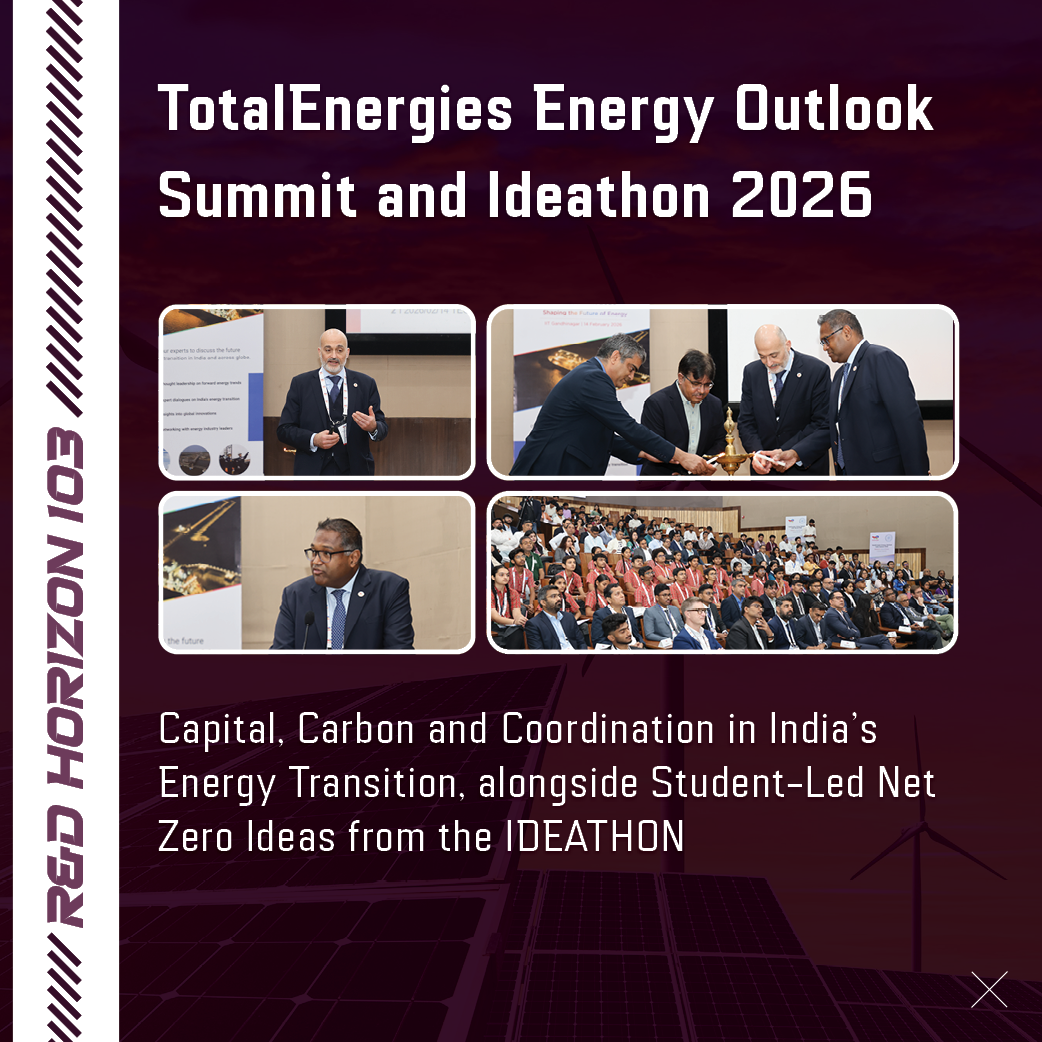
TotalEnergies Energy Outlook Summit and Ideathon 2026
Moreflip_to_frontTotalEnergies Energy Outlook Summit and Ideathon 2026
The TotalEnergies Energy Outlook Summit 2026 brought together industry, finance, and academia to examine one central question: how does India grow its energy system without locking in emissions? Dr Sangkaran Ratnam set the tone during the inaugural speech. Electrification and renewables are coming, he said, whether we’re ready or not. “The debate isn’t about if anymore. It’s about how fast, and who’s prepared to put in the capital and the work.” And if recent events in the Middle East have shown anything, the cost of moving too slowly is no longer theoretical.
Find Out More
Share favorite_border -
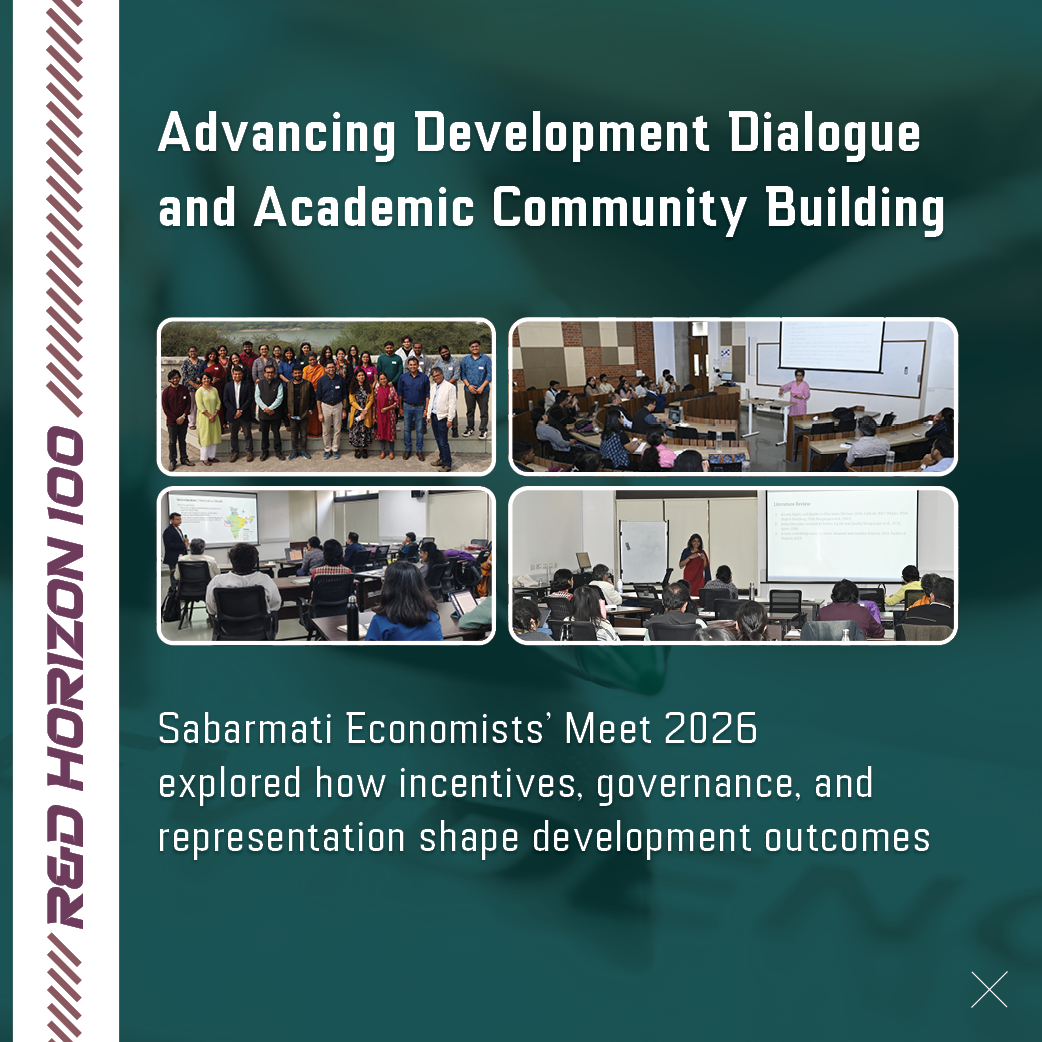
Advancing Development Dialogue and Academic Community Building
Moreflip_to_frontAdvancing Development Dialogue and Academic Community Building
IITGN hosted the ‘Sabarmati Economists’ Meet 2026’ on January 30 and 31, bringing together academic researchers from central Gujarat for thoughtful conversations on topics of national importance, from gender and education to water and public policy. Organised by the Humanities and Social Sciences Department, the event featured keynote sessions and seminars by academics from IIM Ahmedabad, Indraprastha Institute of Information Technology Delhi, Ahmedabad University, and the Institute of Rural Management Anand. Insightful talks by Prof Namrata Chindarkar on last-mile health services delivery using drones and Prof Abhinandan Sinha on investments and democracy added depth to the programme and were appreciated by participants.
Find Out More
Share favorite_border -
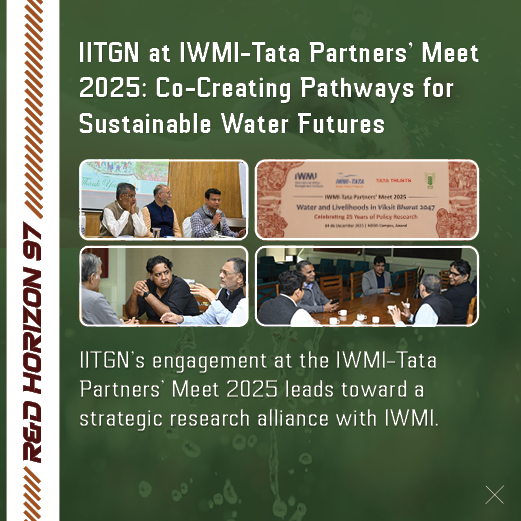
IITGN at IWMI-Tata Partners' Meet 2025: Co-Creating Pathways for Sustainable Water Futures
Moreflip_to_frontIITGN at IWMI-Tata Partners' Meet 2025: Co-Creating Pathways for Sustainable Water Futures
IITGN was invited to the IWMI-Tata Partners’ Meet 2025, held at the National Dairy Development Board (NDDB) Campus in Anand from December 4 to 6, 2025. This flagship event is an initiative of the IWMI-Tata Water Policy Program, created by the International Water Management Institute and Tata Trusts, to share ongoing work, receive feedback, and identify promising opportunities for collaborative application oriented water policy research.
Find Out More
Share favorite_border -
Advancing Data Science Through Immersive Learning
Moreflip_to_frontAdvancing Data Science Through Immersive Learning
IITGN-X, the Education Outreach Program of IITGN, held an enriching seven-day on-campus residency for its Data Science for Decision Making (DSDM) Batch 1 cohort. With a vision to facilitate professional development, the residency was designed to blend academics with industry engagement, providing exposure for DSDM Executive Masters students to cutting-edge technologies.
Find Out More
Share favorite_border -
Innovate, Pitch, Transform: IITGN Hosts Boeing BUILD Bootcamp
Moreflip_to_frontInnovate, Pitch, Transform: IITGN Hosts Boeing BUILD Bootcamp
Share favorite_border
International Collaborations
-
IIT Gandhinagar and Deakin University, Australia, joined hands for academic and research collaboration
Link link -
IIT Gandhinagar and L&T Semiconductor Technologies Forge Strategic Partnership to Drive Innovation in India’s Semiconductor Sector
Link link -
IIT Gandhinagar and the University of San Diego joined hands for academic and research collaboration
Link link -
-
IIT Gandhinagar and the Asian Institute of Technology launch a Double Degree Master’s Program
Link link